
Containment that fits the situation
Small, isolated areas may need localized containment; larger growth or shared HVAC zones can require full critical barriers and negative pressure so spores do not drift through the home or office.
Serving Spokane, Washington & surrounding areas
Mold remediation · Spokane, WA
If you smell a musty odor, see staining, or have had a leak, you need more than surface cleaning. Our certified team finds the moisture source, sets proper containment, removes damaged materials when needed, and documents the work so you can move back in with confidence.
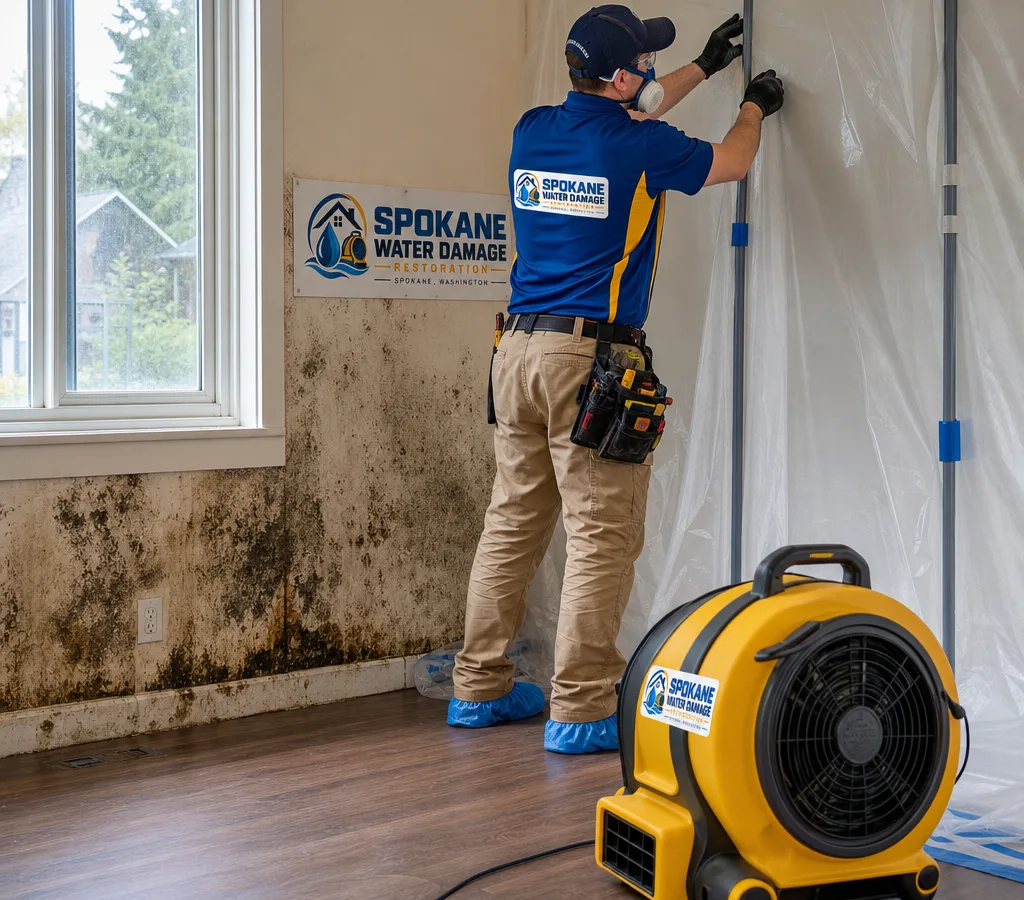
Source control comes first
Spokane mold remediation starts with one question: where is the water coming from right now? Mold can grow quickly when building materials stay damp, and the visible spots are often only part of the problem. A good remediation plan targets the moisture source, the contaminated materials, and the airborne spores released during removal.
In Spokane, we see mold concerns after plumbing leaks, roof and flashing issues, wet crawlspaces, and bathroom ventilation that cannot keep up with everyday humidity. Homes near the Spokane River or with older basements can also have recurring dampness that keeps framing or subfloors at elevated moisture levels.
Spokane Water Damage Restoration handles mold remediation for homes and businesses across the Spokane area. If you are dealing with an active leak or a recent flood event, our water damage restoration work often pairs with mold prevention steps so the same problem does not return after drying.
Controlled removal and cleaning
A real remediation job is controlled demolition and cleaning, not a spray-and-wipe. The goal is to remove contaminated building materials and clean remaining structural surfaces without spreading spores into clean areas.
Typical scope includes:
If testing is requested, it should support decisions, not delay action. If there is visible mold growth or wet, damaged materials, removal and source control are usually the priority.
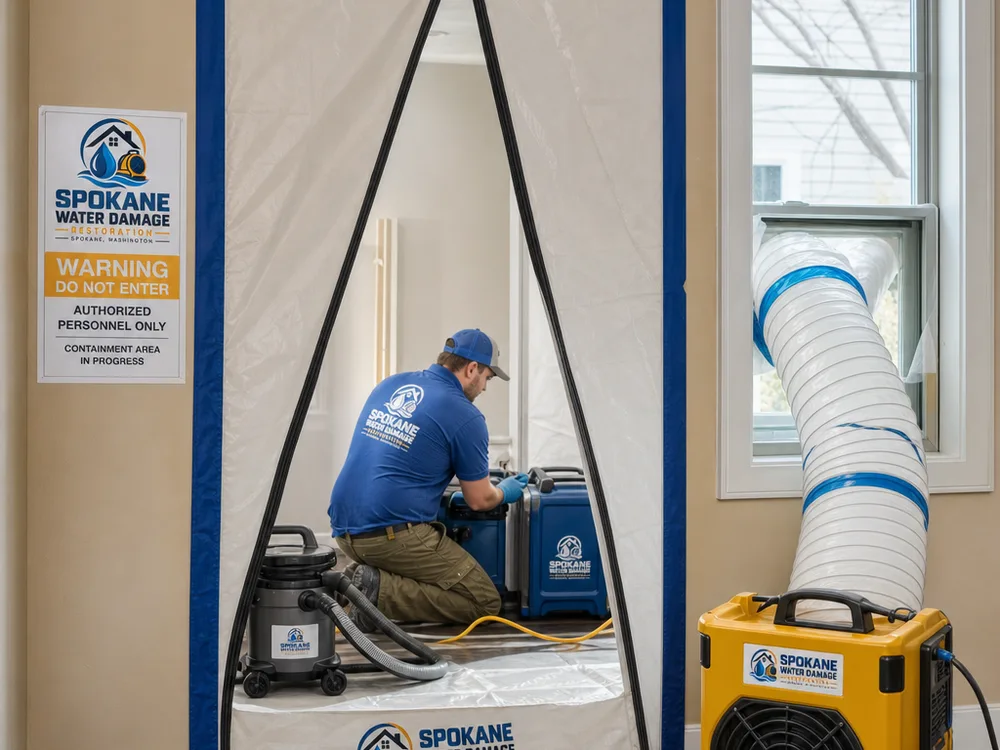
Protection throughout the project
Small, isolated areas may need localized containment; larger growth or shared HVAC zones can require full critical barriers and negative pressure so spores do not drift through the home or office.
We use HEPA filtration and HEPA vacuuming where it matters most: during removal and on final cleaning of the affected structure and the contained area.
Remediation without moisture control is temporary. We look for active leaks, trapped moisture, and ventilation problems so the fix addresses the cause, not only the symptom.
You get a written scope of what is affected, what is being removed, and what surfaces will be cleaned, plus before-and-after photos when appropriate.
We plan access, staging, and dust control for lived-in homes and working businesses so the disruption is contained to the smallest practical area.
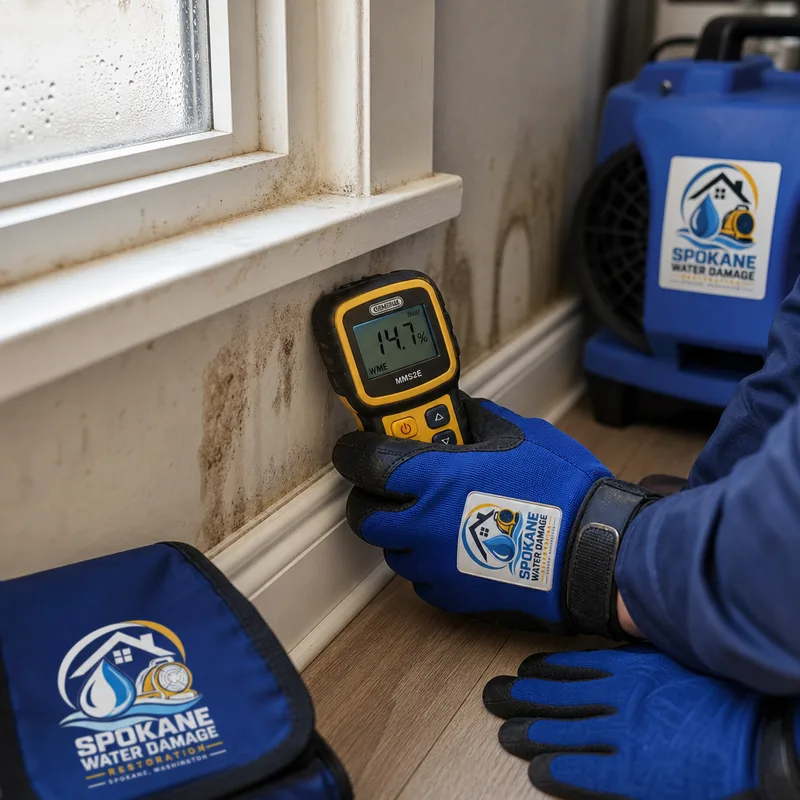
We start with what you are seeing and smelling, then confirm boundaries with moisture readings and a visual inspection of adjacent materials, such as behind baseboards, under sinks, and around windows.
You get a clear scope: what will be contained, what materials are likely to be removed, what surfaces will be cleaned, and what needs to be repaired after remediation.
We isolate the work area and set negative air and HEPA filtration when needed so the rest of the building stays protected during demolition and cleaning.
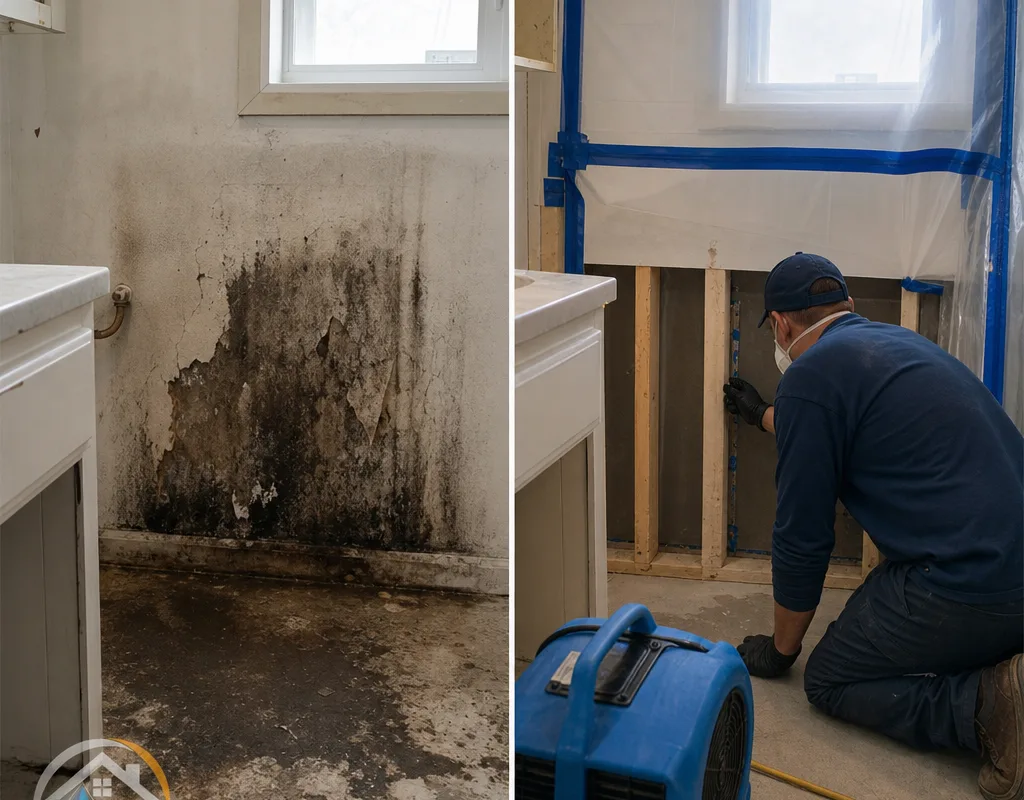
Porous materials with growth are removed and bagged out. Remaining framing or sheathing is cleaned with HEPA vacuuming and damp wiping, and light surface growth is addressed only after the source and materials are handled correctly.
If moisture is still present, drying is coordinated so materials can return to normal conditions. We leave the area ready for any rebuild steps and provide documentation of what was completed.
Spokane mold remediation typically ranges from about $1,500 to $6,000 for common residential projects, while larger or multi-room losses can run $8,000 to $20,000+ when demolition, containment complexity, and drying needs increase. Small, isolated areas, such as under a sink, are usually at the lower end; widespread growth in a basement, crawlspace, or multiple rooms trends higher.
Final cost depends on the square footage affected, what materials must be removed, access such as an attic or crawlspace, whether negative air containment is required, and how much moisture source work is needed before rebuilding. Exact pricing is confirmed after an on-site inspection and a written scope.
Mold often shows up where air circulation is poor and moisture persists. We commonly trace problems back to:
Neighborhood housing patterns can influence where we look first. In areas like South Hill, older homes may have finished basements or older bath ventilation that cannot keep up. In West Spokane, ranch-style homes with crawlspaces often need careful inspection under the floor for damp insulation or subfloor staining. In Spokane Valley, mixed residential and light commercial spaces can have HVAC zones that move air and spores farther than expected, which changes containment strategy.
If you are unsure whether what you see is mold, take it seriously when there is a musty odor, repeated allergy-like symptoms that improve when you leave the building, or staining that returns after cleaning. The safest next step is a professional evaluation so you know what is affected and what it will take to correct it.
Containment, cleaning, and documentation
Start time depends on current workload and the level of containment required, but active moisture and visible growth are prioritized because conditions can worsen quickly. If the area is currently wet from a leak, the first visit focuses on inspection, moisture mapping, and an immediate plan to control spread while scheduling the full remediation scope.
No, but containment is common, and negative air is used when the affected area is large, connected to other rooms, or likely to release spores during removal. The decision is based on the size of the contamination, the materials involved, and whether the space is occupied, because the goal is to keep unaffected rooms clean during work.
Often, yes, when the work area can be fully isolated and there is a safe route for technicians and debris removal, but it depends on the location and scope. If growth is in a main living area, involves an HVAC system, or requires extensive demolition, it may be safer to limit occupancy near the work zone until the contained cleaning is complete.
If porous materials like drywall or fiberglass insulation are contaminated, removal is typically the correct approach because they cannot be reliably cleaned throughout their thickness. The plan focuses on removing what cannot be salvaged, cleaning the remaining structure, and correcting the moisture source so rebuilding is not put at risk.
Testing can be arranged when it helps answer a specific question, such as establishing a baseline, checking suspected hidden areas, or supporting a post-remediation verification plan. For many situations with visible growth and moisture damage, an inspection and a clear remediation scope matter more than waiting on results, because source control and proper removal drive the outcome.
You should expect a written scope and notes on what was removed and cleaned, plus photos when helpful for clarity. For Spokane homeowners and property managers, this documentation is useful for tracking what was done in each area and for coordinating the next steps in repair and reconstruction.
Tell us what you are noticing and where it is happening. We will schedule an on-site evaluation in Spokane, explain the containment and cleanup approach, and provide a written scope with documentation so you can make the next decision with facts.