
Documented drying, not guesswork
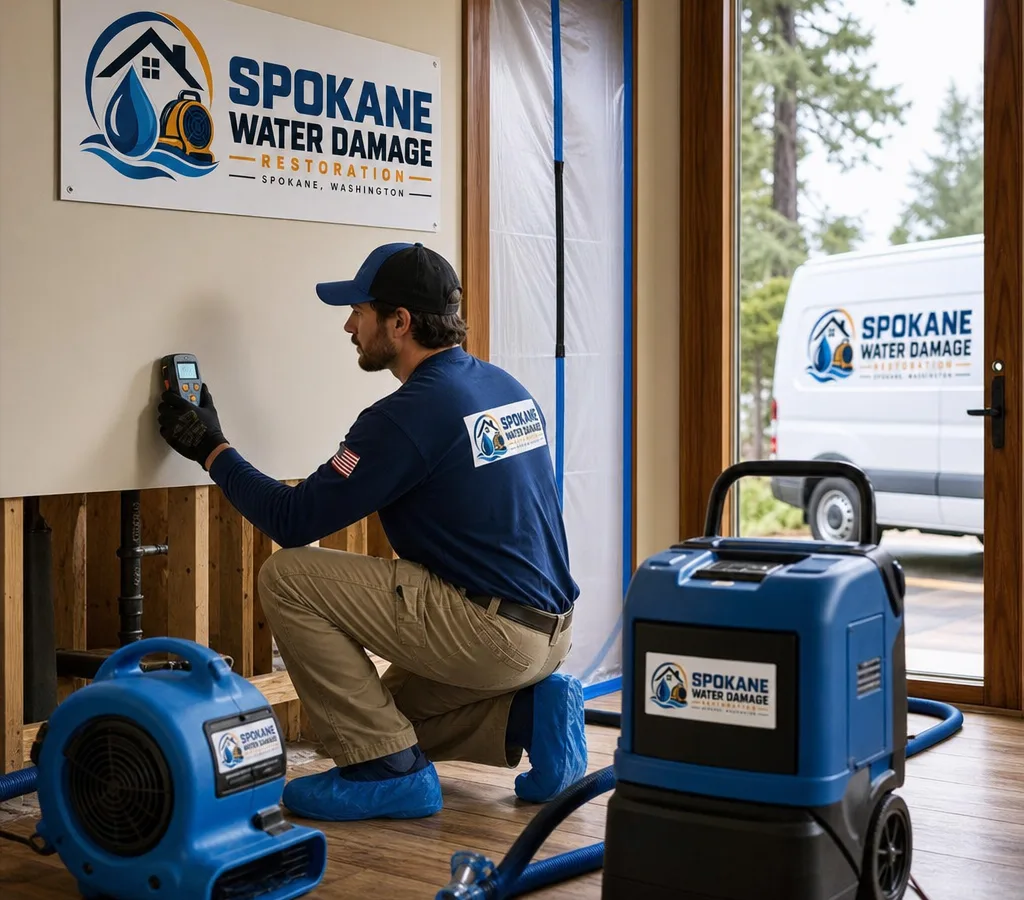
Expect initial moisture mapping, regular readings, and a clear drying target for each material type. A real drying plan is based on measurements, not a number of days.
Serving Spokane, Washington & surrounding areas
Restoration service · Spokane, WA
Get a clear, step-by-step restoration plan after water damage, with documented drying, careful removal of affected materials, and repairs coordinated start to finish by Spokane Water Damage Restoration.
Clear decisions when time matters
When you are comparing restoration companies Spokane homeowners rely on, you are really choosing who will manage the whole chain of decisions after damage: what can be dried, what must be removed, what is safe to keep, and how the space gets put back together.
A good restoration company Spokane residents can trust does more than bring fans. You should expect a written scope, moisture documentation, and a plan that matches building science and insurance requirements. The first 24 to 48 hours can change the outcome. Water spreads under flooring, wicks up drywall, and soaks insulation. If drying is delayed or poorly measured, odors and microbial growth become a bigger risk and repairs get more invasive.
Spokane homes often include basements, crawlspaces, and older wall assemblies that hide moisture in cavities. That makes proper inspection and containment important, especially when the source was a supply line, appliance, or overflow that ran unnoticed. If you need immediate help or want a restoration plan you can share with your insurer, Spokane Water Damage Restoration can walk you through next steps and what documentation to expect.
Standards for a sound restoration plan
Expect initial moisture mapping, regular readings, and a clear drying target for each material type. A real drying plan is based on measurements, not a number of days.
Restoration starts with stopping the water and making the area safe. That includes electrical awareness, slip hazards, and isolating affected areas when needed.
When materials are removed, the work area should be contained and kept clean so dust and debris do not travel through living spaces.
A professional scope describes what is being removed, dried, cleaned, and rebuilt, plus the order of operations. It should be readable to a homeowner and an adjuster.
The best outcome comes when cleanup decisions support the repair plan. That reduces rework like opening walls twice or replacing flooring after it was installed too soon.
In a real emergency, speed matters. Choose a team that can mobilize quickly and communicate arrival windows, access needs, and what you should do while you wait.
Measured from inspection through repairs
A proper restoration response follows a repeatable process.
First comes inspection and moisture mapping. Technicians should check obvious wet areas and the places water travels: baseboards, behind cabinets, under vinyl or laminate, around floor registers, and inside wall cavities.
Next is water extraction and controlled demolition when needed. Wet pad, swollen baseboards, and saturated drywall at the bottom edge often have to be removed so wall cavities can dry. If materials are salvageable, the plan should explain why, and what drying method will be used.
Then drying and monitoring. This is where many projects go wrong. Air movers and dehumidifiers need to be sized and placed for the space, and the team should record readings over time. Drying should continue until materials hit an acceptable moisture content for rebuilding.
Finally, cleaning and repairs. That can include cleaning hard surfaces, addressing odors, and restoring finishes such as drywall, trim, paint, and flooring. If your claim is going through insurance, the documentation and photos taken along the way make the conversation with the adjuster much easier.
From first inspection to repair planning
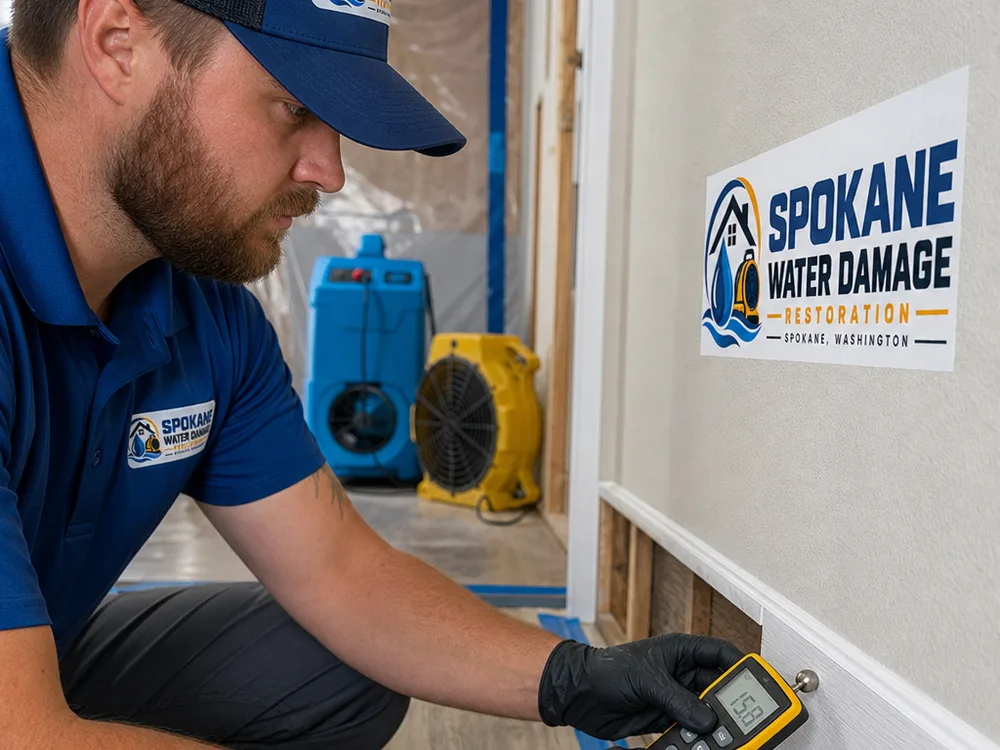
We start by identifying the water source (if still active), checking for safety concerns, and mapping where moisture is present so the scope matches what is actually wet.
Standing water is extracted, then we remove materials that cannot be dried safely or would block drying, such as saturated pad or compromised drywall at the lower edge.
We set air movement and dehumidification based on the layout and affected materials, then track progress with moisture readings until drying goals are met.
We clean and protect salvageable surfaces, manage debris, and use appropriate methods to address odors when the loss conditions call for it.
Once drying is verified, we coordinate the repair scope so the space can be put back into service with the right sequencing of trades.
Property and seasonal context
Spokane restoration work is rarely one-size-fits-all. The construction style and layout change what gets wet and how it dries.
Homes around Kendall Yards and along the Spokane River corridor often mix newer builds with older structures and tight lots, so access and staging can affect how quickly equipment and materials move in and out. In South Hill, many homes include finished basements or split-level layouts, and water can migrate to lower levels before it is noticed. In Hillyard and other older neighborhoods, plaster, older framing, and layered remodels can hide damp cavities and require more careful inspection before any rebuild starts.
Season also matters. During colder stretches, drying requires controlling indoor temperature and humidity so materials dry without creating condensation in cooler cavities. During warmer months, open windows can feel helpful but sometimes work against controlled dehumidification. A good plan explains what to keep closed, what to keep running, and when equipment can be removed.
If you are looking for a broader overview of water damage restoration in Spokane, that can help you understand how inspection, drying, and repair fit together under one project plan.
Written scope after inspection
Most restoration projects in Spokane typically range from $1,500 to $8,000 for a contained water-loss with drying and limited material removal, while larger losses that require demolition and rebuild coordination often run $10,000 to $30,000+ depending on what is affected.
Final pricing changes with the water category, how long materials stayed wet, how many rooms and levels are involved, how much flooring or drywall must be removed, and access constraints like tight basements or heavy contents. The exact cost is confirmed after an on-site inspection and a written scope that matches moisture readings and the repair plan.
Homeowner reassurance
“They explained what was wet, what could be saved, and what had to come out. The daily moisture checks made it easy to see progress and helped with our insurance paperwork.”
“We had water under the flooring and behind the baseboards. The crew contained the area, kept the house clean, and the rebuild plan matched what we wanted instead of rushing the finish work.”
You should aim to start extraction and drying as soon as possible, ideally the same day, because water can wick into drywall, insulation, and subflooring within hours. If you cannot get a crew immediately, shut off the water source (if safe), avoid using outlets in wet areas, and move valuables up and away from the wet zone until a technician can map moisture and start controlled drying.
You should receive a written scope of work plus photos and moisture readings that show what was wet at the start and what is dry before repairs. For insurance claims, this documentation helps justify why certain materials were removed and why drying ran for a specific period, especially when moisture is trapped in wall cavities or under flooring.
Often you can stay in the home if the affected area can be contained and utilities remain safe, but it depends on how much demolition is required and whether drying equipment noise affects sleep or work. If a kitchen, primary bath, or main living area is involved, many homeowners choose temporary arrangements until drying is complete and repairs are underway.
Some materials can be saved if they dry to acceptable levels without trapping moisture, but others are commonly removed because they block drying or are easily damaged. For example, wet carpet pad usually cannot be effectively dried in place, and swollen baseboards often need replacement. The decision should be based on moisture readings, material type, and how long the area was wet.
Drying commonly takes several days, but the full restoration timeline depends on the scope of repairs after drying is verified. If only drying and minor material removal are needed, you may be close to normal use quickly. If drywall, flooring, cabinets, or multiple rooms are affected, the repair phase can extend the total project timeline.
Compare them on three things: their inspection and moisture documentation process, how clearly they explain what will be removed versus dried, and how repairs will be coordinated after drying. Ask who will be your point of contact, how often you will get updates, and what must be completed before any rebuild starts so you do not install finishes over moisture.
Tell us what happened and what areas are affected. We will inspect, document what is wet, and lay out a clear scope for drying and restoration work so you can make decisions with confidence.